
What It Means If Your AC Still Uses R-22 Refrigerant
Oakville summers can swing from warm to very humid, especially near the lake, and that is usually when older cooling systems get tested. Some older central air conditioners are still running on R-22 refrigerant (HCFC-22), and many homeowners only learn that when the system stops cooling well. The biggest concern is usually not that your AC is automatically illegal to run.
The concern is that HCFC-22 (R-22) supply is tightly controlled under federal rules, which can make refrigerant-related repairs more complicated and potentially more expensive if your system develops a leak. This FAQ explains what R-22 is, what you can check safely at home, and when it is smarter to repair rather than replace.
What Is R-22 Refrigerant, And Why Does It Matter?
R-22 (also called HCFC-22) is an older refrigerant used in many air conditioners installed years ago. Refrigerant is the fluid that helps your AC move heat out of your home so the air delivered indoors feels cooler.
It matters today for one practical reason: Canada’s rules phased out new supply, which can affect availability and cost when repairs involve refrigerant. Under federal regulations, importing recovered, recycled, or reclaimed HCFCs was permitted only up to January 1, 2020, and that change is one of the reasons R-22 has become harder to source than it used to be.
Is It Illegal To Own Or Run An Air Conditioner That Uses R-22?
No. Owning or operating an older air conditioner that uses R-22 is not automatically illegal.
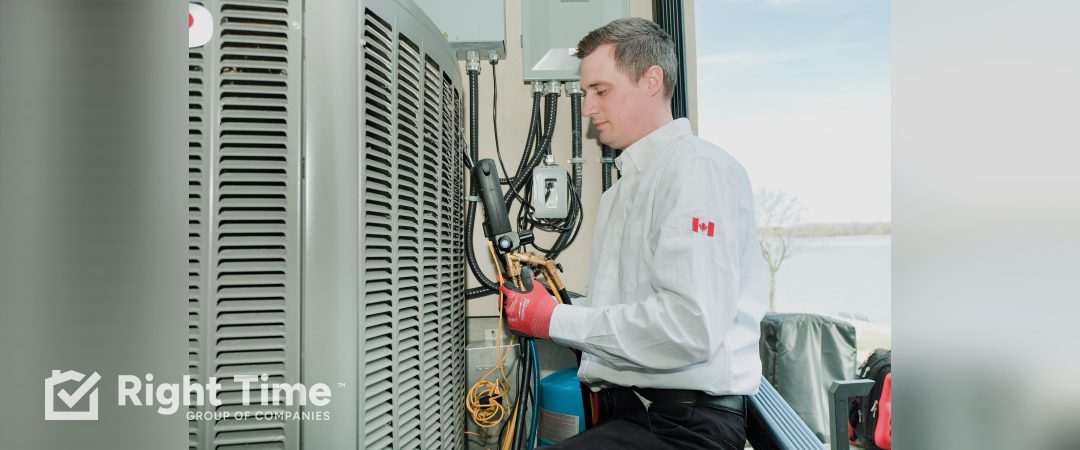
What is tightly controlled is how refrigerant is handled. Refrigerants must be recovered and managed properly to prevent releases, so diagnosis, leak repair, recovery, and recharging should be done by trained, licensed professionals, not as a DIY project.
How Can You Tell If Your Air Conditioner Uses R-22?
Most homeowners confirm refrigerant type in one of these ways:
- Rating plate on the outdoor unit (often lists the refrigerant type)
- Owner’s manual or installation paperwork
- Service inspection, where a technician confirms the refrigerant and checks the system condition
System age can be a clue, but it is not a guarantee. A professional inspection is the most reliable way to confirm what you have.
What Happens If An R-22 AC Develops A Leak?
Refrigerant does not get “used up” in a properly sealed system. If the refrigerant is low, it usually points to a leak that should be found and repaired.
With older R-22 systems, leaks tend to create two common issues:
- Repair Complexity: leak detection and repair must be done correctly, and older components can be more fragile.
- Higher Total Cost Risk: because R-22 supply is more limited, refrigerant-related work can cost more than homeowners expect.
The Key Takeaway: When refrigerant is low, the best question is usually “Where is the leak?” rather than “Can we just add more?”
Can You “Top Up” R-22 Or Convert The System To A New Refrigerant?
A quick top-up without fixing the leak is not a real solution. It can lead to repeat failures and higher total costs over time.
Conversions are also not always simple or cost-effective. Switching refrigerants can require changes in compatibility and, sometimes, major component updates to avoid reliability issues. In many cases, it is more practical to compare repair versus replacement based on:
- System age and condition
- Likelihood of recurring leaks
- Repair cost versus replacement value
- Comfort performance (airflow, coil condition, run-time behaviour)
What Are The Signs It May Be Time To Replace An Older R-22 Air Conditioner?
R-22 alone is not an automatic reason to replace your system. But many R-22 units are also at an age where replacement becomes the more predictable option.
Common signs to replace an air conditioner include:
- Frequent repairs, or the same issue returning each cooling season
- Cooling that feels weaker even after basic maintenance
- Long run times with limited temperature improvement
- Uneven cooling from room to room
- A refrigerant leak plus other age-related wear (corrosion, noisy operation, electrical issues)
When a major refrigerant-related repair comes up in peak summer, it helps to compare options calmly rather than deciding in the middle of a heat wave.
What Can Homeowners Check Safely If The House Is Not Cooling Well??
These things to check for air conditioning maintenance are homeowner-safe and can solve a surprising number of “not cooling” complaints.
Homeowner-safe AC checklist:
- Replace or clean the air filter (restricted airflow affects comfort and can make the air feel stale)
- Confirm thermostat settings (cool mode, reasonable setpoint, batteries if applicable)
- Make sure supply vents are open, and return grilles are not blocked
- Clear debris around the outdoor unit so it can “breathe” (turn power off first)
- Watch for icing on the refrigerant line or reduced airflow (turn the system off and call a pro if icing appears)
NRCan also emphasizes practical maintenance, such as keeping filters clean and ensuring the outdoor unit is not blocked, since airflow and system performance are closely linked.
How Does This Connect To Indoor Air Quality In Summer?
In Oakville, summer comfort is not just about temperature. Humidity and airflow play a big role in how your home feels.
Even when an air conditioner is running, indoor air can feel “heavy” or stuffy when:
- Airflow is restricted by a dirty filter
- Return grilles are blocked
- The outdoor unit is clogged with debris
- Ducts leak or deliver unevenly
That is why an R-22 conversation should still include airflow and filter habits, not only refrigerant. For some homes, optional add-ons like UV air purification, which Oakville homeowners ask about, can be part of a broader air quality plan, but the foundation is always airflow, filtration, and correct system operation.
What Should Always Be Left To A Professional?
Anything involving refrigerant, electrical diagnostics, or sealed components should be handled by trained technicians. Pro-only work includes:
- Refrigerant leak detection, repairs, recovery, and recharge
- Opening sealed panels and diagnosing electrical/control issues
- Measuring airflow and static pressure
- Performance testing and coil service that requires disassembly
This is especially important for older R-22 systems, where proper handling and compliance are critical.
One Simple Next Step If You Suspect Your AC Uses R-22
Start by confirming refrigerant type and checking overall system condition. From there, the decision becomes clearer: a minor repair and tune-up may still make sense, or it may be time to plan a replacement before peak demand.
For Oakville air conditioning service questions, AtlasCare can assess your current system and explain repair versus replacement options in plain language. If you prefer ongoing seasonal support, you can also review AtlasCare’s Maintenance Plans as a simple way to stay ahead of cooling problems.